
From starter homes to parking reform, MAP’s model legislation toolkit gives legislators and advocates everything they need to act.
Middle Housing
Re-Legalizing Missing Middle Housing
This bill makes it legal to build townhomes and small buildings with up to six homes (duplexes through six-plexes) in residential neighborhoods.
Middle Housing
About the bill
“This is about choice. This is about allowing for different opportunities in neighborhoods that are currently extremely limited.”
— State Representative Tina Kotek, chief sponsor of HB 2001, NPR, July 2019
“A victory for private property rights and the legislature's effort to address Montana's housing crisis by giving landowners in cities more freedom to build homes.”
— Kendall Cotton, CEO, Frontier Institute, Daily Montanan, March 2025
What this bill does
For most of American history, neighborhoods mixed single-family houses with duplexes, fourplexes, and small apartment buildings; many of today’s most beloved neighborhoods were built this way. In the late 20th century, most cities banned these types of homes in residential areas. This bill brings them back, allowing up to six homes on residential lots through a simple approval process with no public hearing.
Why it's needed
Small, multifamily homes are more affordable than single-family houses; they allow several families to share the cost of the land and infrastructure. But in most cities, they are either illegal, or so heavily regulated that they rarely get built. Outdated rules like parking mandates, design review requirements, and infrastructure fees often make these homes financially infeasible. This bill establishes a statewide standard for middle homes, and supports local implementation through technical assistance and a model local ordinance.
Frequently asked questions
What does this bill actually do?
- Legalizes up to six homes on lots in residential neighborhoods. Local jurisdictions must allow these homes on any residential lot through a simple approval process, with no public hearing (a.k.a. “ministerial review”).
- Makes it easier to convert existing homes. Any existing house can be converted into up to six homes while retaining current height, setback, and design, so owners can add homes without rebuilding to meet newer standards.
- Stops cities from using fine print to block middle housing. Design and siting rules can’t be stacked up to make middle housing too expensive or impossible to build.
- Eliminates parking mandates. Allows homeowners and builders to decide how much off-street parking they need.
Sets a 14-day approval clock. Projects not approved in two weeks are “deemed” approved. - Applies statewide, with support for local implementation. The state provides technical assistance and a model ordinance that local jurisdictions can adopt, or adapt to local conditions. Until a jurisdiction updates its own rules, the model ordinance serves as the default.
What does middle housing look like?
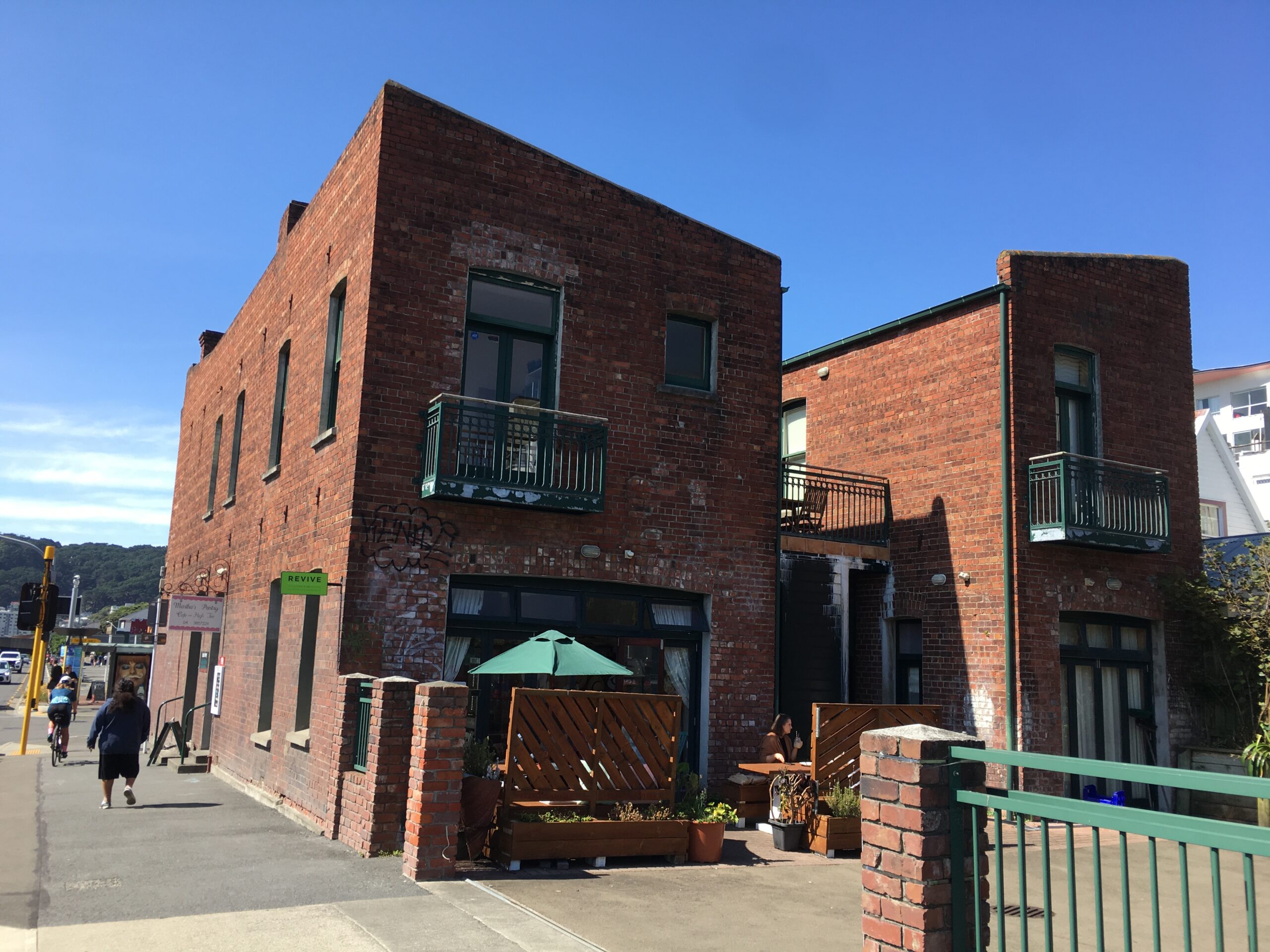
Middle housing includes “plexes” (duplexes, fourplexes, etc.), townhomes, and small apartment buildings built in residential neighborhoods. Many of the neighborhoods people value in older American cities include this mix: a row of townhomes next to a single-family house, a duplex on a tree-lined street, or a small apartment building designed to look like a large house. These homes house more families on the same amount of land as single-unit houses, and typically cost less than detached houses due to economies of scale. Today, most American cities have banned these types of homes in most residential neighborhoods.
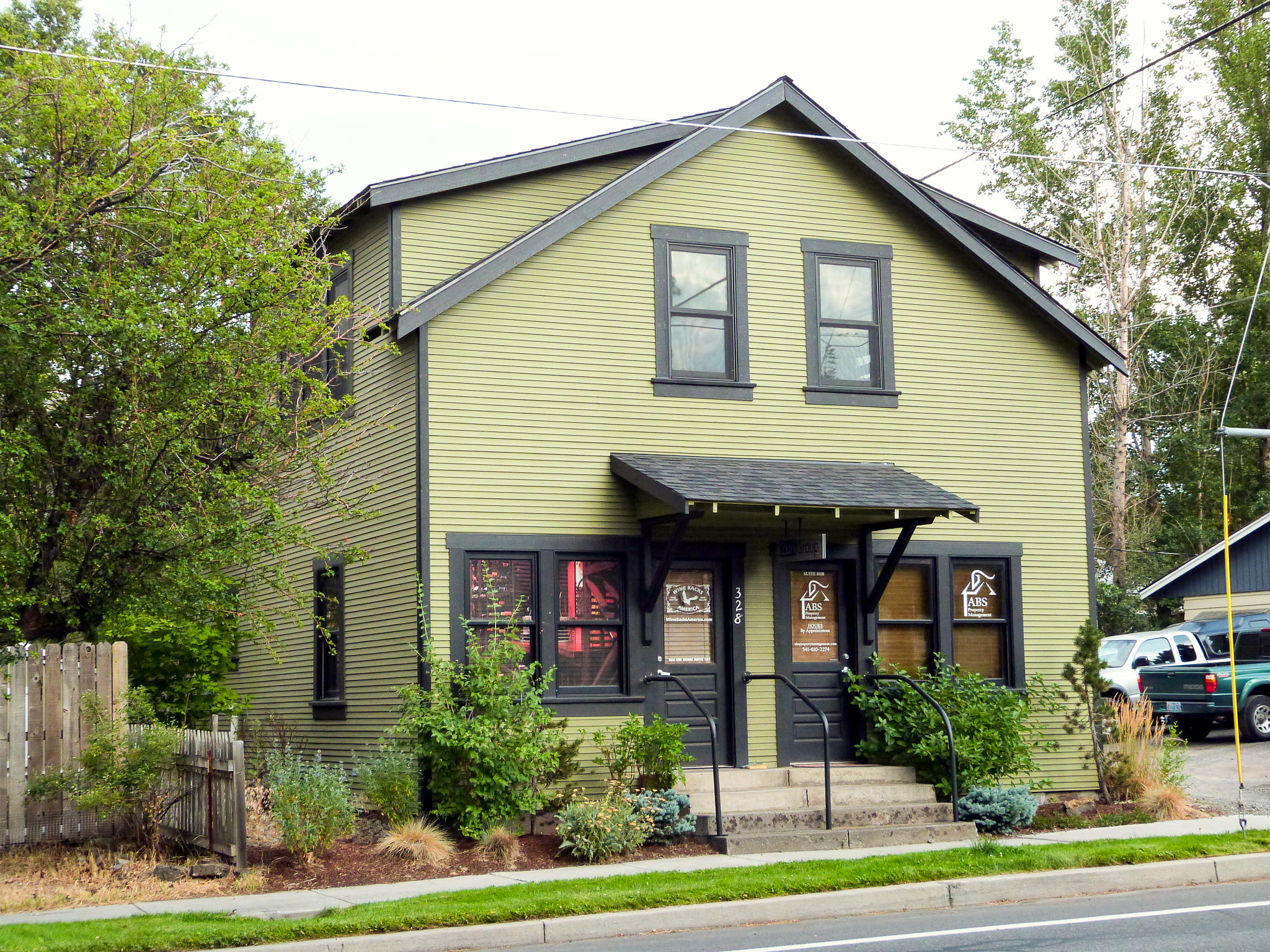
Photo by Ian Poellet, CC BY-SA 3.0, via Wikimedia Commons
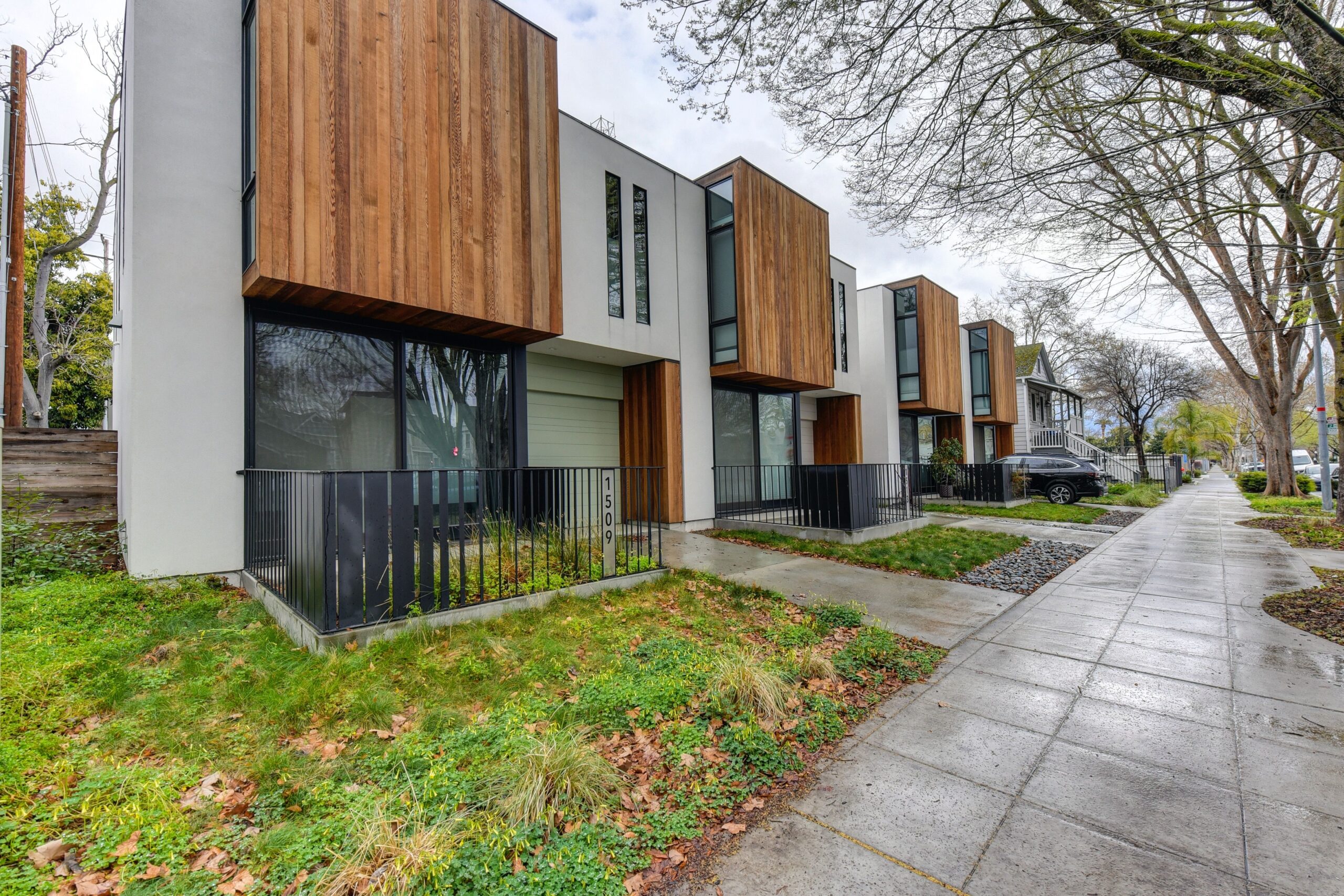
Photo by Stephen Leonardi via Pexels
Who benefits from this bill?
This bill benefits people at every stage of life who want more housing options in the neighborhoods where they live and work. Nearly three in four adults over 50 want to stay in their communities as they age, but the homes that would make that possible, such as a smaller unit on a familiar street or a duplex near family, are not allowed in most residential neighborhoods.
First-time buyers, young families, and workers who want to live near jobs and schools face the same shortage of options. Homeowners benefit too, with new flexibility to add a unit for a relative, a caregiver, or rental income. By allowing a wider range of homes, the bill helps residents find housing that fits their needs without leaving the communities they know.
AARP supports state reforms that allow middle housing as part of its policy agenda for helping older adults age in place.
Most older adults want to stay in their homes, yet rising housing costs and limited options create serious barriers.
– Rodney Harrell, Vice President of Family, Home and Community, AARP, December 2024
Why does this need to be state law?
Middle housing is well suited to most residential neighborhoods, and a state law establishes a consistent standard. A statewide approach also saves each local government from having to draft and adopt its own ordinance, a process that takes significant time and staff capacity. Most importantly, allowing these homes at scale creates a real market for them. When builders, lenders, and designers can work across many communities under the same rules, small multifamily projects become easier to finance and build.
Why can't local governments just fix this themselves?
Several cities have already taken steps to allow middle housing, and their experience shows why statewide standards are needed and how to make them effective. Minneapolis, Minnesota, legalized duplexes and triplexes citywide in 2020, and Portland, Oregon, legalized up to fourplexes the same year. In the years since, Portland has seen steady growth in townhomes, though builders in both Portland and Minneapolis have produced fewer duplexes, triplexes, and fourplexes than many expected.
Spokane, Washington, passed one of the strongest and most productive local middle housing ordinances in the country. The city legalized fourplexes citywide in 2022 with fewer added restrictions and saw a meaningful increase in new homes. Washington passed a statewide middle housing law the following year.
Together, these cities show that legalization works best when paired with clear, practical rules. Parking requirements, rigid design standards, and lengthy review processes can limit what gets built, and many communities have not yet updated their rules at all. This model bill sets a consistent statewide standard, informed by what has worked best, so that families in every community have access to more housing choices.
How much housing will middle housing reform produce?
The number of homes a middle housing reform produces depends on how strongly the law is written and implemented. Research by Up for Growth finds that nearly 100 million Americans live in places where missing middle housing could be built at prices middle-income families can afford, if policy conditions support it. In Washington state, regional planners estimated that middle housing reform could add roughly 200,000 homes in the Puget Sound region alone over 20 years.
Experience so far suggests that townhomes are often the first type of middle housing to be built in significant numbers, with duplexes, triplexes, and fourplexes following more slowly. Whether these homes are feasible to build depends on several factors, including design standards, parking requirements, and the speed of the approval process. This bill addresses each of these factors, which increases the likelihood that legalization will result in new homes.
Where has middle housing reform passed?
More than a dozen states have legalized some form of middle housing since 2019, in red states and blue states alike. This bill draws on three of the strongest examples: Oregon HB 2001 (2019), which was the first statewide law to legalize duplexes and middle housing in residential zones; Montana SB 323 (2023), which passed in a Republican-controlled legislature; and Washington HB 1110 (2023), which set one of the strongest statewide standards in the country. Vermont, Maine, Rhode Island, Arizona, Florida, and California have all passed related reforms. The momentum is bipartisan and accelerating.
As our state adapts this model legislation, what provisions could weaken the bill?
Many states pass housing bills that look strong on paper but produce few homes. During negotiations, lawmakers often add requirements that seem reasonable on their own but together make projects too costly or risky to build. Watch for these:
- Owner-occupancy requirements. Requiring the owner to live on site shuts out the builders who produce most new homes and makes these projects harder to finance.
- Parking mandates. A single parking space can cost over $50,000 to build, and on small lots it can make a project infeasible. Let builders provide as much or as little parking as their projects need, as in MAP’s People Over Parking Act.
- Discretionary review. Adding hearings or case-by-case approval brings back the delay and uncertainty this bill is designed to remove.
The Legislation
Full model legislation text
Clean version
Annotated
Section 1. Title.
This Act shall be known and may be cited as the Middle Housing Act.
Section 2. Purpose and Intent.
(a) The purpose of this Act is to enable the creation of attainable housing in residential neighborhoods by legalizing Middle Housing, reducing barriers to reuse and conversion of existing homes, improving housing choice, and expanding access to neighborhoods with jobs, schools, transportation, and other community amenities.
(b) This Act is intended to establish statewide minimum standards requiring municipalities to allow Middle Housing as a Permitted Use on Eligible Property, to provide a pathway for Middle Housing Conversion, and to prohibit local standards that individually or cumulatively make Middle Housing impracticable.
(c) This Act is further intended to require state technical assistance, a model local ordinance, and review of state building-code barriers to Middle Housing.
This section states the bill’s core policy choice: middle housing should be legal in residential neighborhoods as a matter of statewide law, and local governments should not be allowed to use zoning, design standards, or permitting procedures to make those housing types impracticable. The structure of this section follows Oregon’s statewide middle-housing reform and Washington’s middle-housing legislation, both of which treat the legalization of duplexes, triplexes, fourplexes, townhouses, and similar forms as a statewide housing and land use priority. The references to reuse, conversion, technical assistance, and building-code review are included because this model is not limited to new construction; it is also intended to make existing homes and existing neighborhoods part of the attainable-housing solution.
Section 3. Definitions.
For purposes of this Act:
(a) “Area Median Income” means the area median income, adjusted for household size, as determined by the United States Department of Housing and Urban Development.
(b) “Complete Application” means an application containing the documents, plans, fees, and information expressly required by state law, this Act, and applicable adopted Objective Standards. An application containing those materials shall be deemed complete by operation of law. No Local Authority shall require additional materials unless expressly authorized by those laws or standards in advance.
(c) “Eligible Property” means a lot or parcel that:
(1) is located in a Residential Area;
(2) is served by public water and sewer, or for which water and sewer service can be provided through standard connection or extension consistent with generally applicable utility standards;
(3) is not located on land lacking sufficient urban services where such services are required by state law for urban residential development; and
(4) is not located on land:
(i) where residential use is prohibited by state or federal law;
(ii) [in a Special Flood Hazard Area as defined by the National Flood Insurance Program];
(iii) in an area of high wildfire hazard severity as defined by the [STATE FIRE MAPPING AGENCY];
(iv) in an area vulnerable to one foot of sea level rise, as determined by the National Oceanic and Atmospheric Administration or the United States Geological Survey; or
(v) on land designated exclusively for industrial or critical infrastructure use.
(d) “Existing Residential Structure” means an existing building lawfully used or designed for residential occupancy.
(e) “Generally Applicable” means a requirement of general applicability that is not tailored to, triggered by, or imposed uniquely on Middle Housing, and that is generally applicable to:
(1) residential development in the same zone;
(2) ministerial residential permits in the jurisdiction; or
(3) new residential construction of a similar building type.
A requirement shall not be considered Generally Applicable if it was adopted or materially amended after the effective date of this Act for the purpose or effect of reducing development capacity or feasible development potential for Middle Housing authorized by this Act.
(f) “Local Authority” means a city, town, village, county, parish, borough, or other political subdivision with authority to regulate land use, zoning, development, or housing.
(g) “Long-Term Rental Housing” means a dwelling unit leased to a tenant for a period of not less than thirty (30) days.
(h) “Metropolitan Statistical Area” means a metropolitan statistical area designated by the United States Office of Management and Budget.
(i) “Middle Housing” means buildings that are compatible in scale, form, and character with detached single-family houses and contain between two (2) and six (6) attached, detached, stacked, or clustered dwelling units, including but not limited to Townhouses.
(j) “Middle Housing Conversion” means the conversion of an Existing Residential Structure into Middle Housing.
(k) “Objective Standard” means a zoning, subdivision, design, parking, infrastructure, or development standard that:
(1) is uniformly verifiable by reference to an external and uniform benchmark or criterion; and
(2) does not depend on personal or subjective judgment by a public official.
(l) “Permitted Use” means the ability to be approved without requiring a public hearing, variance, conditional use permit, special permit, special exception, or other discretionary zoning action, other than a determination that a site plan or development application conforms with applicable Objective Standards and state law.
(m) “Residential Area” means all land where residential uses are permitted, including mixed-use areas.
(n) “State Agency” means the state housing, planning, or land use agency designated by the Legislature to implement this Act.
(o) “State Code Body” means the state agency, board, department, or other authority responsible for adoption or amendment of the state building code and referenced standards.
(p) “Townhouse” means a dwelling unit constructed in a row of two (2) or more attached units, where each dwelling unit shares at least one common wall with an adjacent unit, is accessed by a separate outdoor entrance, and may be conveyed or sold separately.
This definitions section combines the vocabulary used in the strongest recent middle-housing reforms. The definitions of Townhouse, Middle Housing, and Permitted Use follow Oregon and Washington law, which define the core building types and require that they be allowed without discretionary permitting. The definitions of Eligible Property, Residential Area, and Generally Applicable are drafted so the act applies broadly in residential and mixed-use contexts while preserving objective exclusions for land lacking urban services, floodways, heavy industrial land, and similar areas where statewide reform is not intended to apply. The definitions of Existing Residential Structure and Middle Housing Conversion come from the AARP model guidance and are included so conversions can be treated as a central part of the bill rather than an afterthought.
The list of exclusions for properties is tied to federal and state government standards for wildfire hazard, flood risk, and sea level rise.
Section 4. Applicability.
(a) This Act applies statewide to all Local Authorities, including any chartered or home-rule jurisdictions, to the maximum extent permitted by the state constitution. The conversion of existing buildings to housing is a matter of statewide concern.
(b) Nothing in this Act prohibits a Local Authority from allowing more permissive development standards than those required by this Act.
This section establishes that Middle Housing must be allowed in all municipalities minimum housing types they must allow. The final sentence is included so the act sets a minimum statewide floor, not a ceiling, and municipalities remain free to allow more housing types and more permissive standards than the act requires.
Section 5. Middle Housing Entitlement.
(a) A Local Authority shall allow Middle Housing on all Eligible Property.
(b) Middle Housing authorized by this Act shall be a Permitted Use.
This section translates the act’s applicability tiers into actual project entitlements. It follows the basic Oregon and Washington model of guaranteeing a minimum number of units on qualifying residential lots and requiring that those projects be treated as permitted uses rather than conditional or discretionary uses. The key purpose of this section is to make the statewide legalization real at the parcel level.
Section 6. Middle Housing Conversion.
(a) A Local Authority subject to this Act shall allow a Middle Housing Conversion of an Existing Residential Structure into up to six (6) dwelling units as a Permitted Use on any Eligible Property.
(b) A Local Authority shall not require that a Middle Housing Conversion increase the total floor area of the existing structure.
(c) A Local Authority shall not require an Existing Residential Structure used for a Middle Housing Conversion to comply with height, setback, lot coverage, frontage, or design standards from which the structure is already lawfully nonconforming, except that a Local Authority may prohibit an increase in the nonconformity.
(d) A Local Authority may require compliance with generally applicable health and safety standards and with state building-code provisions applicable to the conversion of existing structures.
This section provides a specific conversion pathway for existing homes, which is one of the most important features distinguishing this model from some earlier middle-housing statutes. It follows the AARP middle-housing guide’s recommendation that states allow existing residential structures to be converted into multiple dwelling units without requiring full compliance with zoning standards from which the structure is already lawfully nonconforming. The six-unit figure is a model-legislation choice drawn from the AARP conversion framework rather than from a single enacted statewide statute. The purpose of this section is to make it possible to reuse large existing houses and other residential buildings for multiple homes without forcing demolition or full dimensional re-entitlement.
Section 7. Local Standards and Anti-Preclusion.
(a) A Local Authority may adopt Objective Standards related to the siting and design of Middle Housing only to the extent those standards are Generally Applicable and do not conflict with this Act.
(b) Development standards, design standards, fees, exactions, review procedures, and utility or infrastructure requirements applied to Middle Housing shall not, individually or cumulatively:
(1) create unreasonable cost, delay, uncertainty, or physical infeasibility; or
(2) otherwise make impracticable the permitting, siting, construction, financing, or occupancy of Middle Housing authorized by this Act.
(c) A Local Authority shall not require special design features, unusual amenities, special site features, special sustainability certifications, or similar conditions that are not Generally Applicable and that materially impair feasibility, cost, or timely ministerial approval of Middle Housing.
(d) A Local Authority shall not require off-site improvements, special infrastructure upgrades, unusual frontage improvements, or other external improvements for Middle Housing unless the same type of requirement is Generally Applicable, objective, and roughly proportionate to the impacts of the proposed development.
(e) A Local Authority shall not require zoning, development, siting, or design standards that restrict Middle Housing authorized by this Act to less than three (3) stories or to a floor area ratio of less than one (1.0).
(f) A Local Authority shall review Middle Housing through a ministerial process no more burdensome than the process applicable to detached single-family dwellings.
(g) A Local Authority shall not prohibit the use of any dwelling unit in a Middle Housing development as Long-Term Rental Housing.
(h) A Local Authority shall allow the property owner to determine the size and location of automobile parking on the lot, subject only to objective health and safety standards. No Local Authority may require off-street parking for Middle Housing developments under this Act.
(i) A Local Authority may only consider Objective Standards when evaluating Complete Applications under this Act.
(j) No Local Authority shall deny or condition approval of a Middle Housing development on the ground that:
(1) the project could comply if it were shorter, smaller, had fewer units, had fewer bedrooms, had a different mix of units, or used a different housing type; or
(2) the applicant could redesign the project to avoid a standard that would otherwise make Middle Housing impracticable or otherwise conflict with this Act.
(k) A Local Authority may only deny or condition approval of a Complete Application on the grounds of inadequate water, sewer, fire access, emergency access, or other essential infrastructure if it makes a written finding, based on a preponderance of the evidence, that:
(1) the project would create a specific, adverse impact on public health or safety;
(2) the impact cannot be satisfactorily mitigated through a feasible connection, improvement, operational measure, easement, or other less restrictive requirement; and
(3) denial is necessary because no feasible, less burdensome alternative would address the impact.
The written determination shall constitute an exhaustive list of deficiencies that could reasonably have been identified from the application.
(l) The burden of proof shall be on the Local Authority to demonstrate, by a preponderance of the evidence in the record, that a denial or conditional approval is required because the project fails to meet an Objective Standard that may lawfully be applied under this Act.
This section is the act’s anti-preclusion rule. It follows Oregon’s statutory instruction that local siting and design rules may not, individually or cumulatively, discourage middle housing through unreasonable cost or delay, and Washington’s requirement that middle housing be reviewed through the same permit process that applies to detached single-family residences. The three-story and 1.0 FAR floor are model-legislation additions intended to ensure that middle housing is not legalized in name but suppressed in practice through envelope limits that only allow oversized single-family houses or extremely small multifamily buildings. The parking, ministerial-review, and non-codified-policy provisions all serve the same goal: local regulation may remain objective and generally applicable, but it may not be used to defeat the housing types the act legalizes.
Section 7 requires long-term rentals to be a permitted use for new Middle Housing. The Act doesn’t address the thornier question of whether AirBnB-style vacation rentals can or should be a permitted use.
Section 8. Review and Approval.
(a) A Local Authority shall determine whether a Complete Application for a Middle Housing development is complete within two days of submission and, if incomplete, shall provide a single written notice identifying all missing items and the Objective Standards, adopted code provisions, or other lawfully applicable requirements that require each item.
(b) A Local Authority shall not issue subsequent incompleteness notices for items that could have been identified in the initial notice, except for items made necessary by a material change in the Application or a change in adopted law.
(c) A Local Authority shall approve or deny a completed Application for a Middle Housing development within 14 days after the Application is deemed complete.
(d) If a Local Authority denies a Complete Application for a Middle Housing development allowed under this Act, the Local Authority shall provide a written determination identifying the specific Objective Standards or adopted code provisions that are not met, the specific facts in the record supporting that determination, and the changes necessary to bring the Application into compliance.
(e) If a Local Authority has not approved or denied a completed Application within the time required by this Section, the Application shall be deemed approved.
This section creates a clear ministerial shot clock for middle-housing applications. Washington law already requires cities to apply to middle housing the same development permit process used for detached single-family residences, but it does not itself supply a uniform statewide 2-day completeness period, 14-day final decision period, and deemed-approval remedy. This section therefore turns the permit-equivalence principle into a more enforceable statewide procedural framework. The purpose is to prevent municipalities from complying with the act on paper while using delay and repeated incompleteness notices to discourage applicants in practice.
Section 9. State Model Ordinance.
(a) The State [ ] Agency shall publish a model local ordinance implementing this Act no later than six months after the effective date of this Act.
This section follows both Oregon and Washington by requiring the state to publish a model ordinance Oregon’s middle-housing law required the Land Conservation and Development Commission to develop a model middle-housing ordinance, and Washington RCW 36.70A.636 directs the Department of Commerce to provide technical assistance and publish model middle-housing ordinances. This section uses that same structure because many municipalities will need a state-drafted template to comply quickly and consistently.
Section 10. Local Implementation and Default Effect.
(a) The requirements of this Act shall apply and take effect six months following the effective date of this Act for Local Authorities.
(b) Each Local Authority subject to this Act shall adopt or amend its zoning ordinance, development regulations, subdivision regulations, and other official controls as necessary to comply with this Act by the deadline established in subdivision (a).
(c) If a Local Authority fails to adopt development regulations as required by this Act by the applicable deadline, the model local ordinance published under Section 9 shall apply by operation of law. If the model local ordinance has not yet been published, all Middle Housing types identified under this Act shall be allowed on all Eligible Property subject to this Act without any local limitation inconsistent with this Act.
This section establishes the implementation deadlines and the default effect if a municipality fails to comply. It follows Oregon’s and Washington’s approach of giving local governments a fixed compliance period and then allowing state law or a state model ordinance to control if the locality does not adopt conforming regulations on time. The final sentence is especially important: it ensures that middle housing remains legal by operation of state law even if a municipality delays or refuses to update its code.
Section 11. Recorded Instruments and Association Restrictions.
(a) A provision in a recorded instrument affecting real property is not enforceable if:
(1) the provision would allow the development of a detached single-family dwelling on the real property but would prohibit the development of:
(i) Middle Housing, as defined in this Act; or
(ii) an accessory dwelling unit; and
(2) the instrument was executed on or after the effective date of this Act.
(b) Notwithstanding any other law, a Local Authority shall not require:
(1) a homeowners’ association, condominium association, or any other association as a condition of approval under this Act; or
(2) a shared feature or amenity that would require such an association to maintain or operate the feature or amenity, unless necessary for stormwater management, access, or utility service.
(c) Nothing in this Section prohibits property owners from voluntarily forming or establishing a homeowners’ association, condominium association, or another lawful association, or prohibits a Local Authority from requiring a maintenance agreement, easement agreement, or similar recorded instrument that does not mandate common ownership or an association structure.
This section addresses two common barriers to middle-housing implementation: private recorded restrictions and local pressure to require association structures. The first subsection follows Washington’s prospective covenant reform, which provides that governing documents of new associations may not prohibit the additional housing density required by the middle-housing statute. This model extends that same basic approach to all recorded instruments executed after the effective date. The second and third subsections are model-legislation provisions designed to preserve fee-simple and simple ownership options by preventing municipalities from forcing a homeowners’ association or condominium structure where ordinary maintenance agreements or easements would be sufficient.
Section 12. Statewide Effect and Enforcement.
(a) This Act shall apply uniformly throughout the state.
(b) A Local Authority shall not adopt or enforce any ordinance, regulation, policy, condition, guideline, fee, or practice that conflicts with this Act.
(c) Any local requirement inconsistent with this Act is preempted and shall not be enforced.
(d) An applicant, property owner, or resident aggrieved by a violation of this Act may bring an action in a court of competent jurisdiction to enforce this Act. If the applicant, property owner, or resident prevails, the court shall award reasonable attorney’s fees and costs.
(e) The State Agency may provide technical assistance and may pursue any enforcement action authorized by state law to ensure compliance with this Act.
This section makes the act uniformly enforceable statewide and provides both private enforcement and state oversight. The private right of action and attorney’s-fees provision follows the enforcement logic of modern state housing-preemption laws: if a municipality violates the statute, applicants, owners, and affected residents must be able to go to court and obtain meaningful relief. The technical-assistance and enforcement role for the State Agency follows Washington’s RCW 36.70A.636 and the AARP guide’s recommendation that the state play an active implementation role rather than leaving compliance entirely to local discretion.
Section 13. Severability.
(a) If any provision of this Act, or its application to any person or circumstance, is found to be invalid or unenforceable by a court of competent jurisdiction, such provision shall be severable, and the remaining provisions shall remain in full force and effect.
This is a standard severability clause. It is included so that if one provision of the act is held invalid, the remainder continues in effect. That is especially important in a statewide middle-housing statute, where the entitlement rules, conversion pathway, anti-preclusion standards, implementation deadlines, and enforcement provisions are designed to work together but can still function independently if one part is struck down.
Optional Appendix A. Local Affordability and Cost-Reduction Measures
(a) In adopting regulations or amending plans to implement this Act, a Local Authority may consider ways to increase the affordability of Middle Housing, including:
(1) waiving or deferring system development charges, impact fees, or similar charges;
(2) adopting or amending criteria for property tax exemptions, abatements, or freezes; and
(3) adopting or expanding other locally authorized affordability incentives consistent with state law.
(b) Nothing in this appendix requires a Local Authority to adopt any particular affordability incentive unless otherwise required by state law.
This appendix is a local affordability-tool provision. It follows Oregon’s implementation framework and the AARP guide by making clear that municipalities may consider fee waivers, fee deferrals, tax incentives, and similar cost-reduction tools when implementing middle-housing reform, but are not required by this appendix to adopt any particular program unless other state law independently requires it. The purpose of this appendix is to encourage local governments to pair legalization with affordability-supportive measures without turning those measures into a precondition for compliance with the act.
Lessons from other states
Oregon was the first state to pass a middle housing bill, passing HB 2001 in 2019 and legalizing duplexes and fourplexes statewide. Arizona, California, Maine, Massachusetts, Montana, Rhode Island, Vermont, and Washington have since passed their own versions of middle housing reform, each with different standards and thresholds.
AARP has developed excellent Re-Legalize Middle Housing resources and a state legislation guide, Re-Legalizing Middle Housing!
- Missing Middle Neighborhood Kit, Opticos Design
- Surveying Missing Middle Housing: Trends in the United States and Massachusetts, Joint Center for Housing Studies, Harvard University (2023)
- Unlocking the Potential of Missing Middle Housing, Terner Center for Housing Innovation, UC Berkeley (2022)
Oregon — enacted 2019
Oregon's House Bill 2001 was the first statewide middle housing law in the country. Passed with bipartisan majorities in both chambers, it requires cities with populations over 10,000 to allow duplexes on all residential lots, and cities over 25,000 to allow triplexes, fourplexes, cottage clusters, and townhomes. The state provided $3.5 million in technical assistance grants to help cities update their local codes and published a model code for jurisdictions that needed a starting point.
The bill's sponsor, then-Representative Tina Kotek, had introduced a narrower duplex bill in 2017 that failed. That failure proved useful: it helped organize supporters, surface real opposition, and identify the dealbreakers that needed to be addressed before the 2019 bill could pass. A bill that doesn't pass is not wasted effort if you treat it as a learning exercise.
HB 2001 also barred new private covenants from prohibiting middle housing, limited local parking mandates, and prohibited local rules that imposed unreasonable cost or delay.
The results so far have been more modest than many supporters hoped. The state’s rules limited, but did not eliminate, local minimum lot size and parking requirements, and some cities kept those rules at the most restrictive level allowed. Most new middle housing in Oregon has been townhomes, with relatively few triplexes or fourplexes built. Oregon returned in 2025 with HB 2138, a follow-up bill addressing remaining barriers around building size and construction standards.
"This is about choice. This is about allowing for different opportunities in neighborhoods that are currently extremely limited."
— Representative Tina Kotek, chief sponsor of HB 2001, NPR, July 2019
- Oregon Just Voted to Legalize Duplexes on Almost Every City Lot, Sightline Institute (2019)
- Oregon Lawmakers Vote For More Duplex, Quadplex Housing, NPR (2019)
- Oregon's Zoning Reforms Are Working, But They Need Some Upgrades, Sightline Institute (2025)
- Eight Ingredients for a State-Level Zoning Reform, Sightline Institute (2021)
Montana — enacted 2023
Montana's Land Use Planning Act (Senate Bill 323), sponsored by State Senator Jeremy Trebas (R-Great Falls), required cities with populations over 5,000 to allow duplexes on all residential lots through a simple over-the-counter permit process. The bill passed as part of a broader bipartisan housing package.
Implementation has been complicated by litigation. A homeowner group challenged the law in court, and a judge struck down some permit reform provisions in 2025 on state constitutional grounds related to public participation. The duplex provisions of SB 323 were upheld.
"A victory for private property rights and the legislature's efforts to address Montana's housing crisis by giving landowners in cities more freedom to build homes."
— Kendall Cotton, CEO, Frontier Institute, Daily Montanan, March 2025
- Supply Reforms Put Housing on the Agenda Even in Red States, Shelterforce (2026)
- Affordable Housing Bills: Legitimate Government Concern, Judge Rules, Daily Montanan (2025)
Washington — enacted 2023
Washington's House Bill 1110 passed on a bipartisan vote in 2023, allowing duplexes on most residential lots statewide and up to fourplexes in larger cities, all approved through a by-right process with no public hearing required. Within a quarter-mile of a major transit stop, larger cities must also allow sixplexes if two units are reserved for lower-income households. Cities with populations between 25,000 and 75,000 must permit fourplexes if one unit is reserved for lower-income households. The bill also applied anti-displacement standards to local planning and provided legal support to cities working to comply with the new requirements.
Spokane was ahead of the state, legalizing fourplexes across the entire city in 2022 before state law required it. As Spokane City Council President Breean Beggs put it when the vote passed: "When Spokane leads, the state follows." Washington's statewide law passed the following year, with Spokane's experience cited as a catalyst.
"Modest middle housing options like duplexes and triplexes provide more affordable options for Washington's working families while also slowing suburban sprawl, preventing deforestation, reducing pollution-causing traffic, and creating more walkable communities."
— Representative Jessica Bateman, chief sponsor of HB 1110, KREM, May 2023
- Washington's 2023 Middle Housing Bill Explained, Sightline Institute (2023)
- Spokane Already Ahead on Expanding Middle Housing as Gov. Inslee Signs Statewide Legislation, KREM (2023)
Issue tags
Related model legislation
More model legislation